The Quiet Work Behind RAG Systems
A practical look at the less glamorous work that makes retrieval augmented generation useful.

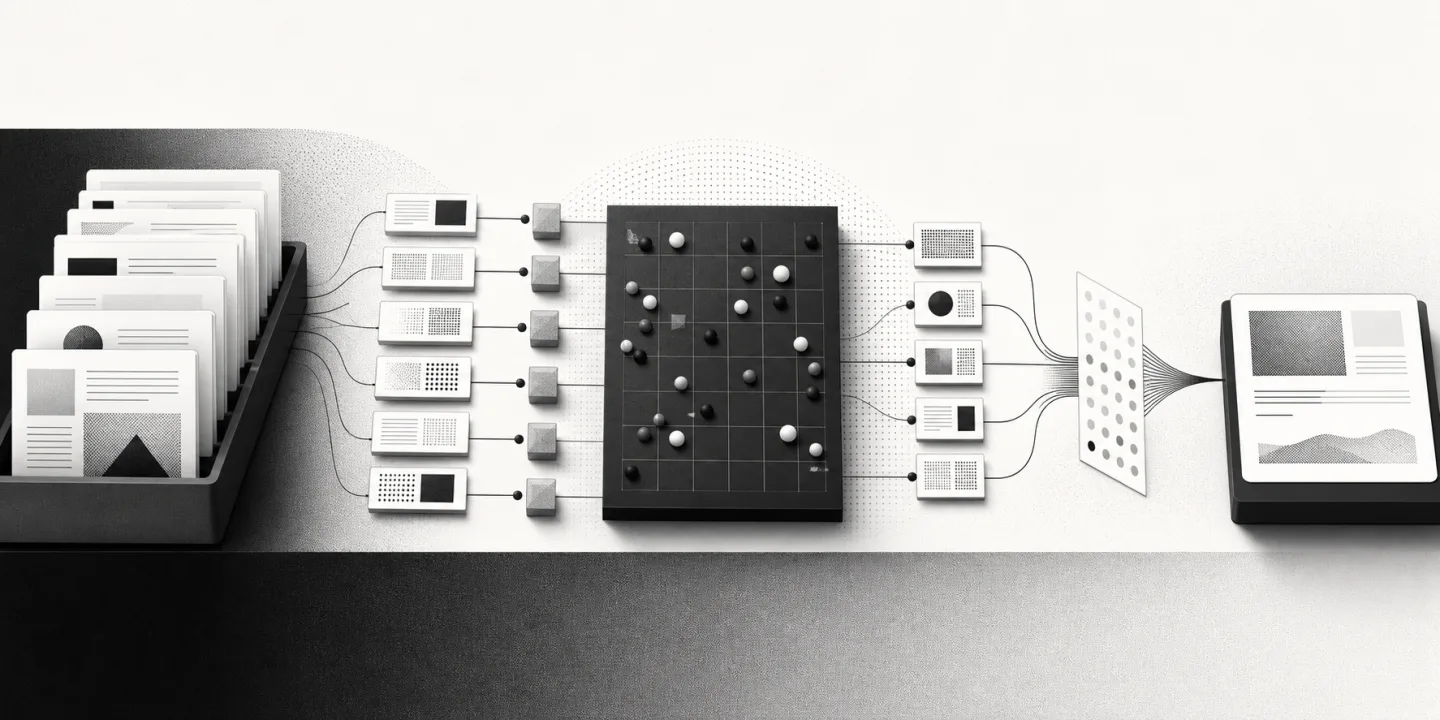
Retrieval augmented generation sounds clean when you explain it in one sentence. Put the right context in front of the model and get a better answer.
The real work is less clean, but much more interesting.
Most RAG systems are not hard because the model call is hard. They are hard because knowledge is messy. Documents are duplicated. PDFs have strange layouts. Teams disagree on which source is official. A paragraph that looks useful may be outdated. The user's question may need context from three different places.
This is where the quiet work begins.
Ingestion is product work
A good RAG pipeline starts before embeddings.
It starts with asking what the user actually needs to retrieve. Policies, lesson plans, support articles, shipment data, product docs, internal notes, and compliance material all behave differently.
The chunking strategy should follow the domain. The metadata should reflect how people search and filter. The update process should match how the source changes in real life.
If ingestion is careless, retrieval becomes guesswork.
Evaluation matters more than vibes
I like testing RAG systems with real questions as early as possible. Not only happy-path questions. I want the annoying ones too.
Questions with missing context. Questions with similar answers in different documents. Questions that should not be answered. Questions where the correct response is "I do not know."
That last one is important.
A useful AI system does not need to answer everything. It needs to know when the available context is not enough.
The interface should show its work
Users trust RAG systems more when the product makes retrieval visible without making the experience heavy.
That can mean citations. It can mean source snippets. It can mean timestamps. It can mean a clear note when the answer is based on limited context.
The point is not to expose the whole pipeline. The point is to make the answer accountable.
The quiet parts decide the quality
RAG is often presented as a model problem, but the quality usually comes from everything around the model: document hygiene, retrieval strategy, metadata, evaluation, permissions, and product design.
That work is not loud. It does not always look impressive in a demo.
But it is the difference between a clever chatbot and a tool people can actually use.