What Small Mobile Apps Taught Me About Taste
What focused apps like budget, fitness, and travel tools taught me about product taste.
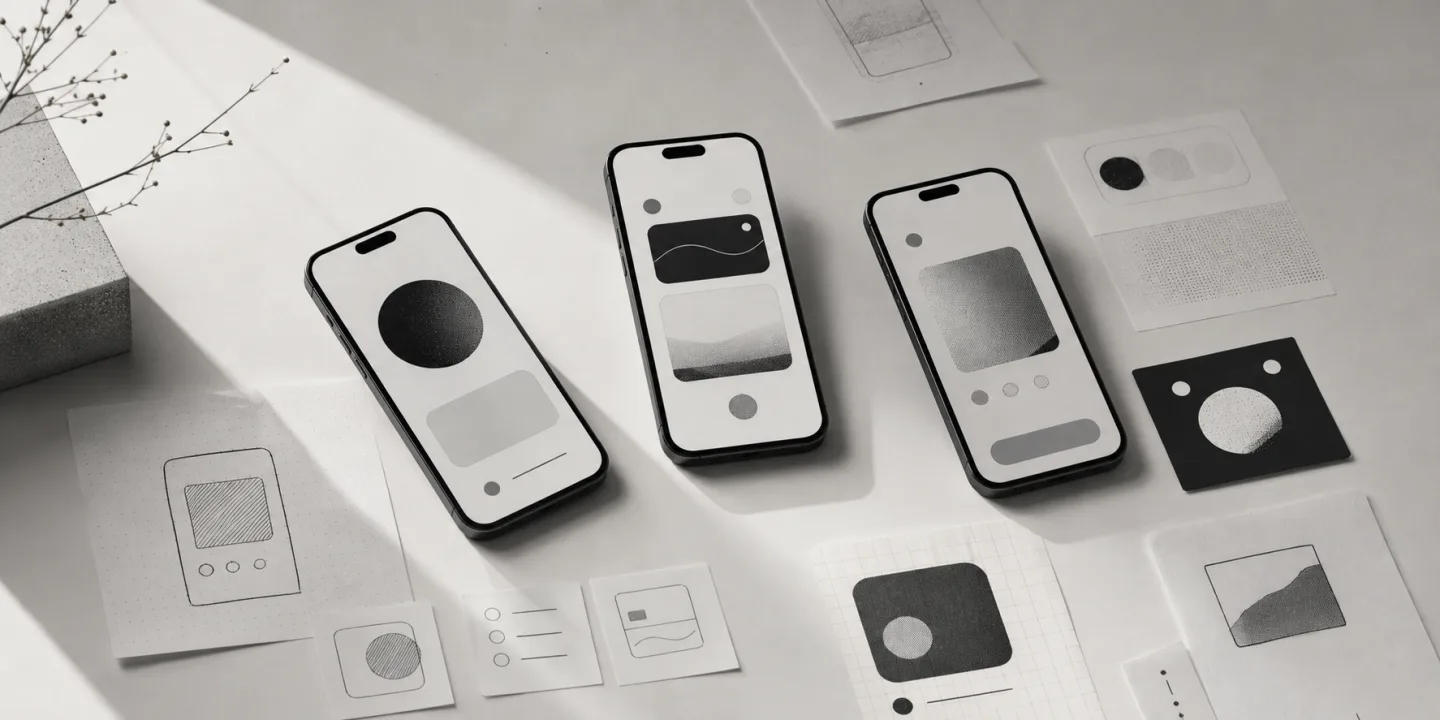
Building small mobile apps has taught me that taste is not just how something looks. It is how much respect the product gives to the user's attention.
I felt this clearly while working on apps like Tarsi, Kabi, and Mayi. They are not massive platforms. They are focused tools. A budget tracker, a gym companion, a travel buddy. Because the scope is smaller, every decision becomes louder.
If a screen is confusing, there is nowhere to hide it. If an interaction feels slow, the whole app feels slow. If a feature sounds clever but does not help the user move, it gets in the way.
Small apps are honest like that.
Taste shows up in subtraction
When I was younger, I thought better products meant more features. More tabs. More options. More ways to customize things.
Now I think better products usually come from removing the wrong things.
The hard part is knowing what to keep.
For a finance app, the user might be tired and just wants to log an expense before they forget. For a fitness app, they might be between sets and have ten seconds to record what they did. For a travel app, they might be standing somewhere unfamiliar with bad signal.
Those contexts matter more than a fancy interface.
Good taste means noticing that.
The details compound
A small app lives or dies by tiny moments:
- Does the first screen make sense without explanation?
- Can the user recover from a mistake?
- Is the empty state helpful?
- Does the app still feel useful offline?
- Can someone understand the value in the first minute?
None of these sound dramatic, but they add up. The product starts to feel cared for. Users may not name every detail, but they feel the difference.
That is the kind of craft I want in my work.
Small does not mean casual
I used to think small products were practice for the "real" thing. I do not think that anymore.
Small products are real. They ask for discipline. They ask you to decide what matters and then prove it in a limited space.
That constraint has made me a better engineer. It has made me less impressed by complexity and more interested in clarity.
That is a lesson I keep bringing back to bigger systems too.